About the Project
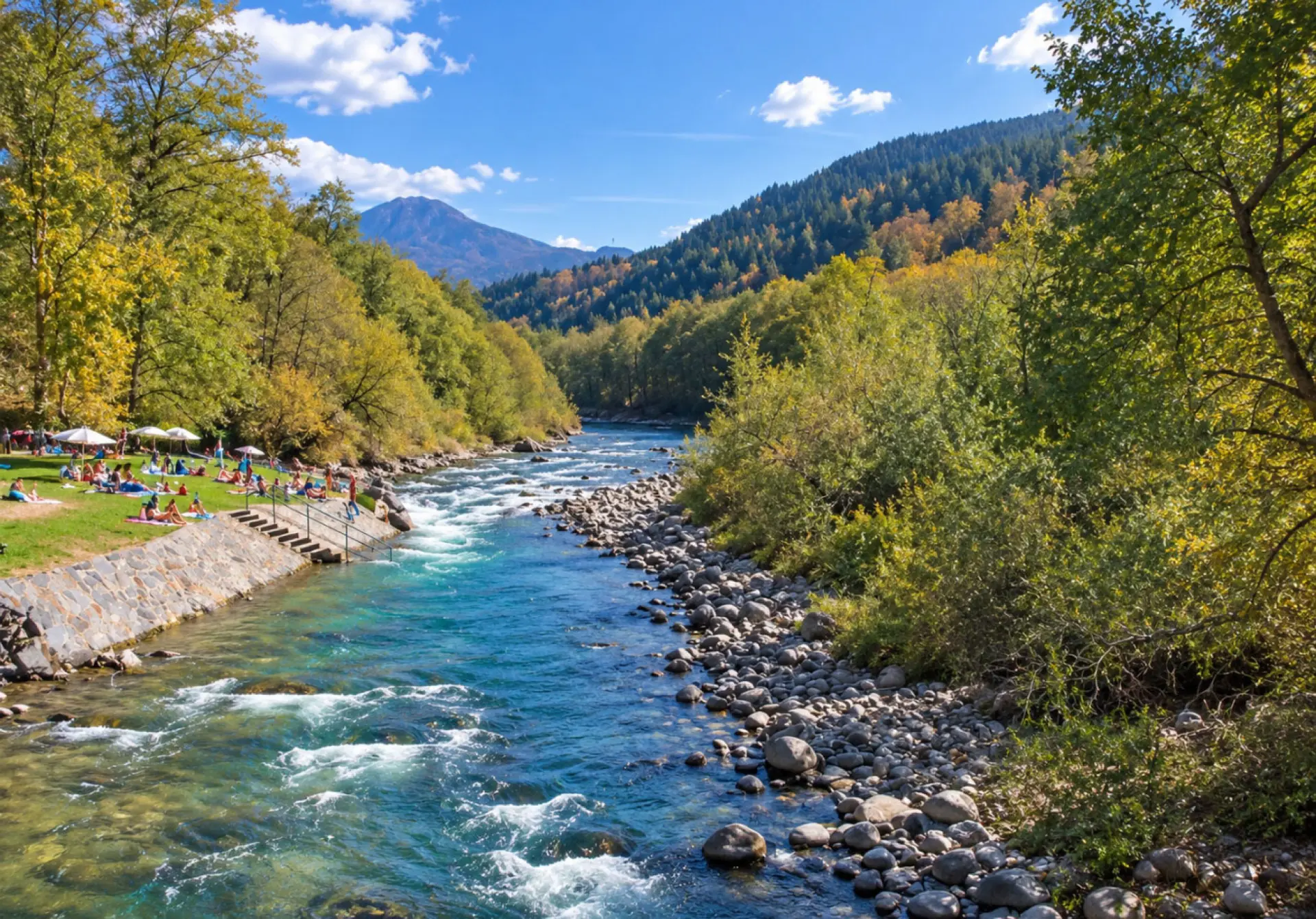
The planned SORGITI 1 and SORGITI 2 hydropower projects in the Jejora River Valley are based on Environmental Impact Assessment materials, information submitted within the administrative proceedings of the National Environmental Agency, and the results of studies conducted by qualified organizations.
The National Environmental Agency requested additional information related to the projects and, following its review of the submitted materials, issued a positive environmental decision. Project implementation is permitted subject to compliance with the conditions defined in the environmental decision. Environmental oversight is not a one-time process - monitoring will continue throughout both the construction and operational phases.
At the company’s request, a full engineering-geological assessment for SORGITI 1 and SORGITI 2 was prepared by a suitably qualified organization and submitted to the National Environmental Agency. The assessment is available through the LEPL National Environmental Agency and on its official website - ei.gov.ge.
Within the framework of SORGITI 1 and SORGITI 2, a range of social and infrastructure measures are planned, including local employment, increased municipal revenues, support for education, improvement of roads and utility infrastructure, expansion of internet access, development of safety systems, and the creation of tourism and recreational areas.
The geographical scope of the initiatives varies depending on their nature. Funding generated through property tax and seasonal road clearance benefit all villages in the valley.
Other infrastructure projects are planned for villages in the valley that are directly adjacent to the Jejora River.
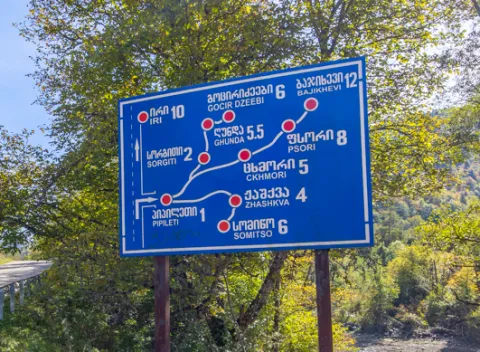
The annual Social Assistance Fund covers five villages: Pipileti, Sorgiti, Onchevi, Kvedrula, and Iri.
Property Tax - Annual Revenue for the Local Budget
Following the completion of construction and the commissioning of the hydropower plants, the company will pay approximately GEL 1,600,000 annually in property tax to the Oni Municipality budget.
The local authorities have already decided to allocate 30% of this amount approximately GEL 480,000 to addressing the needs of villages in the valley.
According to information provided by the company, funding for the valley’s villages from property tax revenue will continue annually, with no predetermined end date.
100 - 150 Local Employees During Construction
During the construction period, the project is expected to employ an average of 100–150 local residents in various positions.
Once the hydropower plants become operational, the creation of 40–50 permanent jobs is planned.
GEL 100,000 Annually - Social Assistance Fund for 5 Villages
Under the Social Assistance Fund, a total of GEL 100,000 will be allocated annually to five villages: Pipileti, Sorgiti, Onchevi, Kvedrula, and Iri. Each village will receive GEL 20,000 per year.
Funding will begin once construction is completed and the hydropower plants are commissioned, and will continue annually, indefinitely.
Internet Access and Safety
As part of the valley’s infrastructure development, fiber-optic internet connectivity will be introduced, improving local residents’ access to modern and reliable internet infrastructure.
In addition, a valley-wide camera surveillance system is planned. The system is intended to contribute to a safer environment and help prevent illegal fishing in the river.
River and Tourism - Swimming, Camping and Recreational Areas
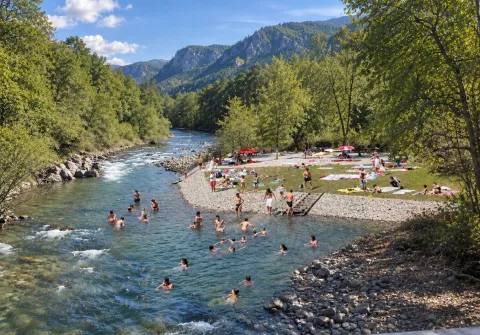
The project provides for the development of tourism and recreational opportunities in the Jejora River Valley.
Within the SORGITI 2 area, six recreational locations have been selected, where the following are planned:
- rehabilitation of traditional swimming areas;
- development of new swimming areas;
- creation of camping sites;
- development of seasonal rafting locations.
During the swimming season, water abstraction must be managed in a way that ensures sufficient water remains at the selected locations for their practical use. Recreational measures do not alter the mandatory requirement to maintain the ecological flow.
Education and Professional Opportunities
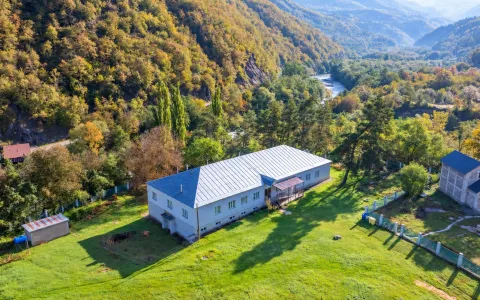
The establishment of a vocational school specialising in energy at Pipileti Village Public School has been confirmed. Work is actively underway with the Ministry of Education to establish the school.
The school will offer the following training programmes:
- Electrical Systems and Installation;
- Electromechanics and Maintenance of Energy Equipment;
- Fundamentals of Hydropower;
- Occupational Safety.
Graduates of energy-related programs may also have an opportunity to seek employment with the company, subject to their qualifications and available positions.
The project also provides for support for education, including assistance for gold-medal students and university students.
The company has already purchased a minibus for the transportation of students and teachers of Pipileti Public School, and the school will periodically be supplied with equipment necessary for its operation.
Community Investments - Schools, Libraries and Shared Spaces
The social component of the project includes the development of public spaces and support for existing community infrastructure throughout the valley.
Plans include the construction or rehabilitation of community gathering spaces, old clubs, libraries, and sports grounds. Demolition of unused and deteriorated buildings is also planned.
Roads, Drinking Water and Infrastructure
Improvements to existing infrastructure are planned in villages across the valley. Roads and trails will be constructed or rehabilitated to improve access to pastures, forestry areas, and tourism locations.
The project also provides for improvements to drinking water intake facilities and central electricity transmission lines.
24/7 Readiness - Heavy Machinery for the Needs of the Valley
The company’s heavy machinery fleet will remain on standby 24/7, throughout all four seasons, in order to respond when needed, including for:
clearing village roads, widening roads, and providing rapid response during natural disasters or emergency events.
The Jejora River and Water Flow Regime
For the operation of SORGITI 1 and SORGITI 2, minimum thresholds have been established for the amount of water that must remain in the river channel.
For SORGITI 2, no less than 28% of the actual natural flow must remain in the river.
For SORGITI 1, the minimum is no less than 25%.
These figures represent minimum thresholds rather than fixed water volumes, as river flow varies seasonally. If mandatory requirements or monitoring results indicate that a higher flow is necessary, the higher requirement will take precedence.
An automatic hydrological monitoring station has already been installed on the Jejora River and continuously records water levels. The data is stored electronically, while additional control measurements will also be conducted periodically.
Safety and the Somitso Landslide
The Somitso landslide is located on the left slope of the Jejora River, while the hydrotechnical and infrastructure facilities of SORGITI 2 are located on the right bank of the river.
No direct territorial overlap has been identified between the main project structures and the landslide body. In addition, no drilling or blasting works are planned in the vicinity of the landslide.
For safety purposes, the project provides for:
- visual and technical monitoring;
- installation of high-precision GNSS/GPS systems at potentially landslide-prone locations;
- engineering-geological supervision throughout all stages of construction;
- additional assessment of work and safety conditions, together with appropriate preventive measures, if any significant changes are identified.
Environmental Protection and Restoration
The Environmental Impact Assessment covers the evaluation of water flow regimes, geological and landslide risks, biodiversity, forests and vegetation, waste, air quality, noise, impacts on local communities, and other social considerations.
Following the completion of construction works, land restoration measures and the planting and cultivation of native tree and plant species are planned for construction sites and spoil disposal areas.
The project also provides for biodiversity and ichthyofauna monitoring, stocking the river with juvenile trout, and monitoring the effectiveness of the relevant environmental measures.
Responsible Development and Continuous Monitoring
According to the company, implementation of the social and infrastructure initiatives envisaged under the project has already begun. The exceptions are annual contributions to the social funds and funding derived from property tax revenue, both of which will begin following the completion of construction and the commissioning of the hydropower plants and will continue annually, indefinitely.
Compliance with the conditions established in the environmental decision, as well as implementation of the environmental measures provided for under the Environmental Impact Assessment, is mandatory throughout project implementation.
SORGITI 1 & SORGITI 2 - Responsible Development • Continuous Monitoring • Dialogue with Local Communities